


While the gluing process may seem simple, it's the key step in determining the quality of carton gluing. So how does the machine precisely control the gluing accuracy of the carton? This article explains this key process.
1. Pre-setting the Gluing Path
Before gluing, workers enter parameters into the control system of the Automatic Pasting Machine for Corrugated Boxes based on the carton size and the location of the gluing edge. Based on this information, the system automatically plans a precise gluing path, applying glue only to the inside of the overlapping edge of the carton, avoiding areas that need to be exposed. This ensures that the gluing mechanism operates only where it's intended, eliminating waste and misalignment.
2. Precise Glue Amount Adjustment
The gluing mechanism is equipped with a dedicated glue-amount adjustment valve that allows you to set the glue amount per millimeter based on the carton material (such as the thickness of the corrugated paper) and the gluing requirements. For example, when gluing small express delivery cartons, use a smaller amount of glue to avoid overflow; when gluing thicker cartons such as those used for home appliance packaging, use a larger amount to enhance adhesion. Furthermore, the glue delivery pipe within the mechanism utilizes a constant pressure design to ensure a uniform flow of glue.
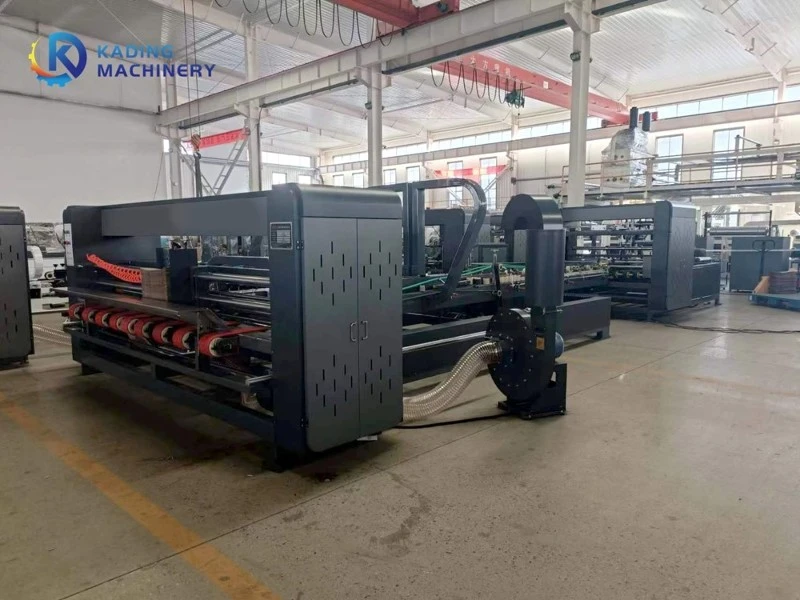
3. Precise Gluing for Carton Lamination
When the carton board is delivered to the gluing station, the positioning sensor of the Automatic Pasting Machine for Corrugated Boxes instantly detects the carton's position, ensuring that the gluing mechanism is perfectly aligned with the bonding edge. The gluing head then moves along a pre-set path, applying glue evenly along the inside of the bonding edge at a steady speed. During the process, the gluing head maintains a distance of 1-2 mm from the carton board, preventing damage to the carton surface while ensuring that the glue adheres precisely to the designated area, eliminating missed or incorrect applications.
4. Real-time Monitoring: Immediately Stop Operations in the Event of Abnormalities
The gluing process is also equipped with a real-time monitoring system. A glue level sensor monitors the glue level in the glue tank in real time, automatically alarming when it falls below a set point to prevent "empty coating." Furthermore, a visual sensor checks the gluing trajectory for deviations and even glue application. If any problems, such as overflow or glue breakage, are detected, the equipment is immediately stopped and workers are alerted to investigate, reducing defective products at the source.


